
Referee review: Sunderland v Arsenal
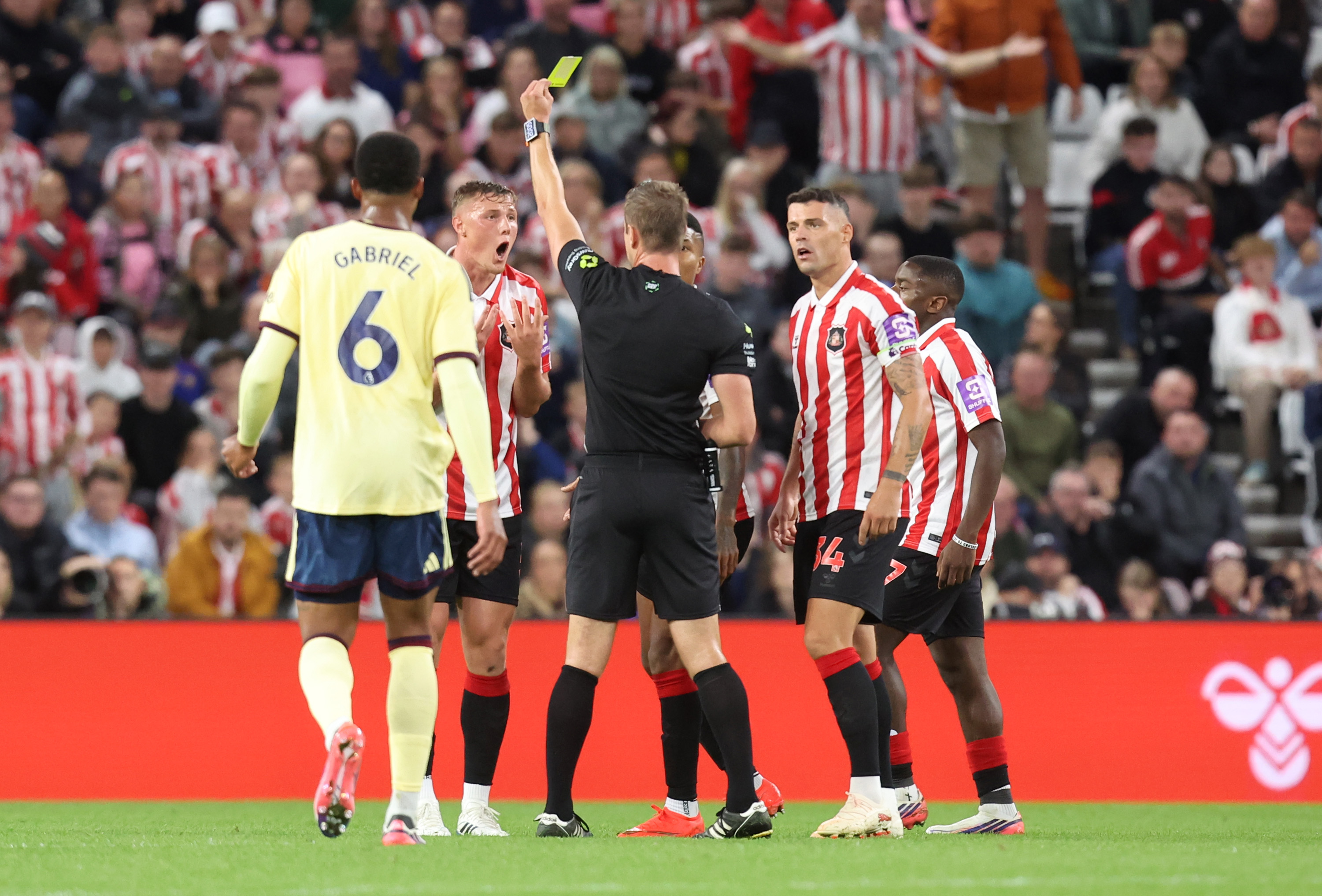
Arsenal left Sunderland with three points after a 2-0 win, but the performance of the officials was far less convincing.
There were questions over consistency, the application of the laws and the use of VAR, with several significant decisions going against the champions.
The clearest example of inconsistency came with the treatment of throw-ins.
Brooks reversed an Arsenal throw after Riccardo Calafiori took 18 seconds to restart play.
According to figures by Scott Willis of Cannon Stats, Arsenal averaged 12.2 seconds over their throw-ins. Three took longer than 20 seconds and none exceeded 30.
Sunderland, meanwhile, averaged 22.5 seconds. Willis recorded “12 that took longer than 20 seconds, 5 that took longer than 30 seconds, and 3 that took longer than 40 seconds.”
Even excluding Sunderland’s long throws, which fall outside the new five-second rule, the home side still had five throw-ins that took more than 20 seconds.
John Brooks did not reverse any of them or even threaten to.
That discrepancy is difficult to justify. Arsenal were punished for taking 18 seconds, while Sunderland repeatedly took longer without suffering the same sanction.
The biggest decision, however, came when Brooks awarded Sunderland a penalty after Dan Ballard was judged to have been fouled by Ezri Konsa when Ballard had instead rolled Konsa to the ground.
The Match of the Day pundits (Thomas Frank and Ashley Williams) agreed it was not a penalty, while Mikel Arteta was furious after the final whistle.
There was more frustration when Martin Odegaard was stamped on without even being awarded a free-kick.
Gabriel was booked while attempting to calm matters after Sunderland players lost their temper, while fourth official Elliott Bell reported Mikel Arteta for leaving his technical area, resulting in another booking.
Brooks’ 3/10 reflects a performance in which the major decisions and the application of the laws lacked consistency.
The throw-in ruling was particularly hard to square with Sunderland being allowed substantially longer delays, while the penalty compounded Arsenal’s sense that they were being judged differently.
VAR Stuart Attwell fares slightly better at 5/10, but his failure to intervene over the Sunderland penalty was the most important part of his afternoon and he blew it.
At 0-0, the decision could have altered the course of the match.
The available footage showed Ballard rolling Konsa rather than Konsa bringing down the Sunderland defender, yet Brooks was not sent to the monitor.
That failure carried greater significance because Arsenal had already been told this week by the Key Match Incidents panel that they should have been awarded a penalty, with a red card shown, when Bruno Guimaraes was brought down against Aston Villa.
The Sunderland decision therefore made it two major penalty calls against Arsenal in only four Premier League matches.
VAR is not there to re-referee every physical contest, but a penalty is one of the most consequential decisions available to an official.
When the footage clearly shows that the player awarded the foul initiated the decisive contact, Attwell had an obvious opportunity to ask Brooks to look again and he refused.
Arsenal were good enough to overcome the officials and leave with a 2-0 victory, but the result should not disguise what happened.
The throw-in law was applied to Arsenal in a way it was not applied to Sunderland, a highly questionable penalty was allowed to stand, and other incidents were handled in a manner that added to the sense that Arsenal are still being refereed differently.
For Arteta and his players, that is the more troubling point. Errors will happen, but when the same side repeatedly appears to be refereed through media narratives rather than the evidence in front of the officials, frustration is inevitable.