
Legacy
One of the key fallouts from the guilty verdict against Manchester City for 114 charges of what I will politely refer to as ‘financial chicanery’ is deep introspection. The idea that a decade’s worth of Premier League football has been tainted by, in the words of the Premier League, a move to ‘artificially inflate the club’s revenues, and reduce its costs, by more than £900 million during the affected period, to appear to comply with financial rules,’ is difficult to reckon with. It is overwhelming.
It is a huge reckoning for the sport at the elite level and an enormous taint to the Premier League’s brand. That the Premier League were so determined to levy the number and gravity of charges in the first place always suggested they were serious about sunlight being the best disinfectant. Fans of various clubs are now left to ruminate on the last 17 years or so (because the impact of the period between 2009 and 2018 doesn’t magically stop in 2018) and question what their alternative timelines might have looked like without this.
Tony Pulis managed Stoke City to a narrow defeat to City in the 2011 FA Cup Final and was quick to speak publicly this week, insisting, ‘I still feel cheated.’ Gabby Agbonlahor spoke on TalkSPORT this week about the impact of City signing players like Gareth Barry, Fabian Delph and James Milner from Aston Villa at a time when Villa were pushing for Champions League qualification.
One can only imagine what Jurgen Klopp must think of all this. While the charges run from 2009 until 2018 it is impossible to limit the impact within that time period in isolation. Klopp put together Liverpool teams that broke the 90 point barrier on three occasions but he only has one Premier League title to show for it.
Relegations, European qualifications, domestic cup finals, Champions League eliminations, the tentacles of this are endless and it remains to be seen how much of that manifests into real life litigation if City’s likely appeal proves to be unsuccessful. But obviously this is an Arsenal site for Arsenal fans and how we retcon this period is especially interesting.
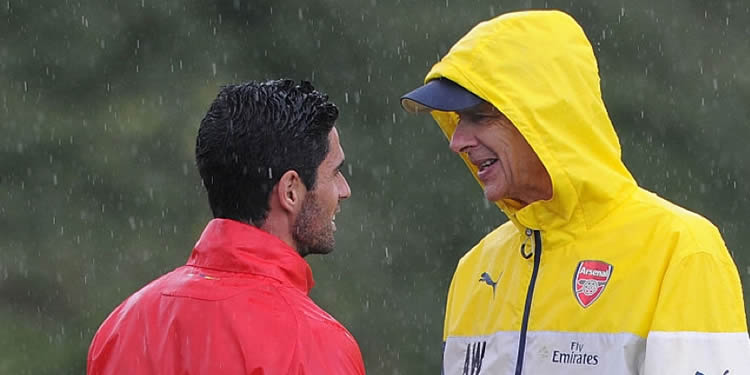
One cannot help but think of Arsene Wenger who was so disillusioned by the French football bribery scandal of the early 1990s that he went to manage in Japan. Wenger’s Arsenal legacy is divided into sections and some of those segments are remembered more generously than others. However, his achievements and his legacy deserve to be revisited (incidentally, it is 30 years this week since he was appointed as Arsenal manager).
Two of the clubs he tried and, let’s be honest, largely failed to compete with in Chelsea and Manchester City have both subsequently been found guilty of breaking rules in a serious fashion. (Though Chelsea’s £47m worth of secret payments, amazingly, is not in the same league as the £900m worth of ‘sham sponsorship deals’ the Premier League alleges Manchester City to be guilty of).
It must be especially galling for Wenger because he was voluntarily hamstrung by stadium move costs which limited what he could spend on his team and created a larger imperative to sell key players. Arsenal took a significant amount of medium term pain- which took a toll on their trophy count- because they were trying to expand their revenues in an organic manner that respected the rules of the competition they were trying to win. That some of his opponents did not respect those same rules ought to represent a partial reckoning for him.
Neither he nor Arsenal will ever be able to get back those years of lost credibility or ridicule they experienced because they could not outrun opponents who were concealing jetpacks under their shirts. I say ‘partial’ reckoning because I don’t think all of Wenger’s mistakes and flaws should be whitewashed. Nobody forced him to buy Mustafi or to make Manuel Almunia the first choice goalkeeper. His legacy deserves to be revisited, if not entirely revised (hand in the FIFA blazer Arsene, please).
Arsene Wenger’s 2008-09 squad, the season City were taken over by ADUG, contained four players who would eventually sign for Manchester City, two of them becoming league champions in blue. Cesc Fabregas would go on to lift a league title with Chelsea too. (Robin van Persie would achieve the same feat with Manchester United but that is obviously different given what we know now). The impact was tangible and direct even before we consider how and where it was intangible and indirect.
If we assume the benefit of City’s digressions between 2009 and 2018 do not shudder to an immediate halt at the end of that timeline, Mikel Arteta’s current successes ought to be replenished too. That he has been able to lead Arsenal to a Premier League title ahead of this judgement makes last season all the sweeter and puts into perspective the difficulty of competing with Manchester City beyond their immediately obvious financial advantage.
Arteta coached a team who won 89 points in a Premier League season and it was only enough for the silver medal. For balance, we should, of course, point out that Arteta was Manchester City’s assistant manager during some of the period the charges relate to and his reputation has benefited tangentially from that.
There will be a lot of coaches, players and clubs who are left to rue how the last 17 years could have looked for them. But this has had a very direct impact on fans too. At a time when elite football has never been more lucrative, the cost of competing has been hyper inflated. Again, this is not to totally handwave the avarice of elite clubs but ticket prices, subscription prices and merchandise prices continue to soar.
Despite the revenues the Premier League generates, it is still not enough to meet the price of competition. And there is only one group of people who feel that pressure financially. Fans. That is the only legitimate source of income for football, even the sponsorship and subscription money arrives on the assumption that we will pay, that these companies have our eyeballs on their products. Adidas do not pay Arsenal small fortunes because they like how the trefoil looks on a £100 hoodie. They do it because we will pay the £100.
And this is what happens when you flood football, or any sport or any industry with money it does not generate organically. The hyperinflationary impact has been significant and we are the ones who have paid the very literal price of that. Football had a greed problem long, long before Manchester City came along (and Arsenal have their part in that), don’t get me wrong, ticket prices and subscription costs were too high before 2008. But that trend has been turbo charged and we have all been left to count the cost.
The post Legacy appeared first on Arseblog ... an Arsenal blog.