
Arsenal Trophies Explained: League Titles, FA Cup, and European Glory
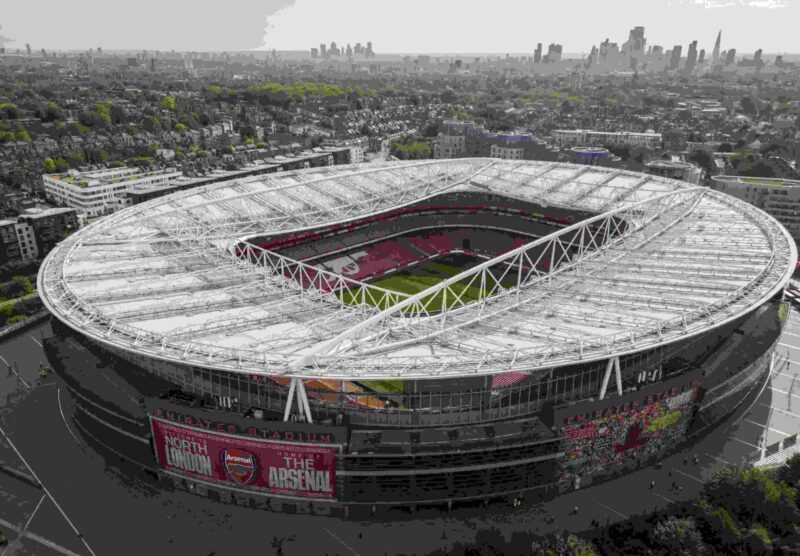
Arsenal’s story of success, often followed by best online casino audiences, began with a simple team made up of workers in Woolwich. League titles, famous FA Cup wins, European matches, and dramatic finals later helped the club become one of English football’s most respected names.
Below, you will read about Arsenal’s journey in English football, the strong teams built by famous managers, the valuable trophies they won at home, their difficult games against Europe’s top clubs, and the historic seasons North London fans continue to celebrate today.
Arsenal began in 1886 as Dial Square, formed by Royal Arsenal workers in Woolwich. The earliest Arsenal trophies remained decades away as the club became Royal Arsenal, embraced professionalism in 1891, joined the League, and moved to Highbury in 1913.
Herbert Chapman played a huge part in building Arsenal’s winning culture, using sharp ideas and running the club in a modern way. Following the breakthrough of 1930, the first Arsenal champions won five league titles that decade, leaving a path others kept using.
Arsenal’s record stands apart because major achievements kept appearing in one generation after another. The club has lifted 14 FA Cups, and the Arsenal Premier League titles include the unbeaten 2003 to 2004 campaign, showing both long term strength and lasting top flight success.
Before asking when did Arsenal last win the Premier League, remember Arsenal claimed its first First Division title in 1930–31. Chapman’s side scored 127 goals across 42 matches and finished 7 points ahead of Aston Villa, making London a serious English football force.
The 1930s gave Arsenal its first great golden period, as five league championships were won within eight years. Then came another huge achievement, with the club becoming England’s second side to take three consecutive top flight titles in 1933, 1934, and 1935.
Later titles produced some of Arsenal’s most memorable moments. The 1970–71 championship completed a historic Double, while Michael Thomas sealed the 1988–89 crown at Anfield. George Graham’s 1990–91 triumph and Arsenal’s later return to title glory continued that tradition for modern supporters.
The Invincibles season of 2003 to 2004 remains Arsenal’s proudest Premier League feat. Wenger’s players avoided defeat across 38 matches, finishing with 26 wins, 12 draws, and 90 points. That streak continued into 49 league games, a lasting English top flight record.
Arsenal secured its first FA Cup on April 26, 1930, defeating Huddersfield Town 2 to 0 at Wembley. Goals by Alex James and Jack Lambert finally brought the club a major trophy, and Herbert Chapman’s team soon carried that momentum into a remarkable 1930s era.
A few finals stayed in Arsenal’s memory for years and years. Charlie George finished the 1971 Double, Alan Sunderland claimed the famous 1979 five-minute final, and Andy Linighan delivered the 1993 cup double. Aaron Ramsey broke a nine-year drought with the 2014 winner.
Arsène Wenger made Arsenal’s connection with the FA Cup even stronger, winning the trophy seven times between 1998 and 2017. His teams also won two domestic Doubles, later lifted three more cups in four years, and made Wenger the competition’s most successful manager.
Arsenal slowly became the FA Cup’s leading club by winning across one era after another. Victory against Aston Villa in 2015 put Arsenal ahead of Manchester United, then wins in 2017 and 2020 stretched the record to 14 titles from 21 trips to the final.
Arsenal claimed its first League Cup on April 5, 1987, defeating Liverpool 2 to 1 at Wembley. Liverpool went ahead through Ian Rush, but Charlie Nicholas soon leveled the match, then scored once more to end an eight year wait in George Graham’s opening season.
The League Cup also brought difficult defeats. Arsenal lost finals to Swindon Town in 1969, Luton Town in 1988, Chelsea in 2007, Birmingham City in 2011, and Manchester City in 2018, often after entering those matches with genuine confidence and high expectations.
Arsène Wenger often used the League Cup to bring academy players closer to the senior team. Cesc Fàbregas first appeared in the competition at 16, while Ashley Cole, Jack Wilshere, Kieran Gibbs, Carlos Vela, and Alex Iwobi picked up valuable experience.
Unlike the phrase Arsenal Stanley Cup, this competition began as the FA Charity Shield before becoming the FA Community Shield in 2002. Earlier formats allowed shared titles, and Arsenal’s only shared success came in 1991 after a 0–0 draw with Tottenham.
Arsenal has won the season-opening fixture 17 times, including 16 outright victories and 1 shared title. That record places the club second behind Manchester United, while triumphs across the 1930s and modern era show how often Arsenal entered seasons as major contenders.
A few Community Shield moments are hard to forget, including Arsenal’s 3 to 0 victories over Manchester United in 1998 and Manchester City in 2014. Then in 2023, Leandro Trossard’s stoppage time equalizer helped Arsenal force penalties and beat City at Wembley Stadium.
Arsenal earned its first European trophy in the 1969 to 1970 Inter Cities Fairs Cup, although Anderlecht won 3 to 1. At Highbury, Eddie Kelly, John Radford, and Jon Sammels scored as Arsenal won 3 to 0 and finished with a 4 to 3 victory.
The 1994 Cup Winners’ Cup still stands as the greatest of the official Arsenal European trophies. George Graham’s organized team beat Parma 1 to 0 in Copenhagen, where Alan Smith struck a left-footed volley before Arsenal’s defense held firm under heavy Italian pressure.
Arsenal reached the 2006 UEFA Champions League final, but Paris brought a painful ending. Barcelona turned things around to win 2 to 1 after Jens Lehmann’s early red card, leaving ten-man Arsenal to play over 70 minutes after Sol Campbell gave them the lead.
The UEFA Cup and Europa League brought Arsenal two more chances for European success, but neither ended happily. Galatasaray won the 2000 final after a penalty shootout, while Chelsea defeated Arsenal 4 to 1 in the 2019 Europa League final played in Baku.
When facing Europe’s top sides, Arsenal has mixed memorable away triumphs with some difficult knockout defeats. The club was the first English team to win at Real Madrid and AC Milan, while victories over Inter and Bayern showed they could trouble long established European powers.
Herbert Chapman gave Arsenal a strong start toward success when he arrived in 1925. He used the WM formation, improved training, added numbered shirts, and made other important changes. Before Chapman died in 1934, Arsenal won its first FA Cup and two First Division titles.
George Graham returned order and belief to Arsenal when he became manager in 1986. A defense and demanding rules led to two league titles, two League Cups, one FA Cup, and the 1994 European Cup Winners’ Cup. Still, Anfield in 1989 remained his biggest achievement.
After joining Arsenal in 1996, Arsène Wenger reshaped the club with new methods in nutrition, sports science, scouting, and attacking play. During his 22 years there, he collected three Premier League titles and seven FA Cups, including the famous unbeaten 2003 to 2004 Invincibles campaign.
When Mikel Arteta took charge of Arsenal in December 2019, the team was having a difficult time. He changed the culture, players, and tactics, won the 2020 FA Cup and two Community Shields, and led Arsenal to a league title that ended a 22-year wait.
The 1930s dynasty featured players who became early Arsenal legends. Alex James controlled matches with intelligence, Cliff Bastin scored 178 goals, Ted Drake delivered 139 in 184 appearances, and captain Eddie Hapgood represented the authority and confidence behind the club’s dominant decade.
Arsenal’s double-winning teams were built around players who gave more in the biggest moments. Frank McLintock and Charlie George shaped the 1970 to 1971 victory, while Dennis Bergkamp, Marc Overmars, Nicolas Anelka, Robert Pires, and Sylvain Wiltord helped deliver Wenger’s league and cup doubles.
The Invincibles generation combined power, intelligence, and attacking brilliance across every area. Thierry Henry scored 30 league goals, Patrick Vieira controlled midfield, Gilberto Silva protected the defense, and Sol Campbell with Kolo Touré helped Arsenal complete all 38 matches without defeat.
Arsenal’s recent captains continued the club’s strong leadership tradition through many important changes. Tony Adams won trophies in three different decades, Patrick Vieira captained the Invincibles, Mikel Arteta ended a nine-year wait for silverware, and Pierre-Emerick Aubameyang led the 2020 FA Cup victory.
Arsenal completed its first League and FA Cup Double in 1970 to 1971. A 1 to 0 victory at Tottenham sealed the title, before Eddie Kelly and Charlie George erased Liverpool’s lead at Wembley, with George scoring the extra-time winner supporters still remember.
The 1988 to 1989 title came down to the final seconds at Anfield. Arsenal had to beat Liverpool by two clear goals, and after Alan Smith scored, Michael Thomas raced forward in stoppage time to make it 2 to 0 and win the championship.
Arsène Wenger’s team made history in 2003 to 2004 by reaching a standard no modern Premier League club had matched. Arsenal avoided defeat in all 38 matches, with 26 wins and 12 draws, then extended it to 49 league games and received a golden trophy.
The 2014 FA Cup final brought nine years of frustration to Wembley. Arsenal went 2–0 down against Hull City in the first eight minutes, but Santi Cazorla and Laurent Koscielny scored before Aaron Ramsey completed the 3–2 comeback in extra time.
Arsenal’s domestic collection features 13 top flight league titles, 14 FA Cups, two League Cups, 17 Community Shields, plus the 1988 Football League Centenary Trophy. Looking at Arteta’s title-winning side also reveals how newer success has grown the club’s historic place in English football.
Arsenal’s continental history features two major victories, the 1969 to 1970 Inter Cities Fairs Cup and the 1993 to 1994 European Cup Winners’ Cup. There were later finals in the Champions League, UEFA Cup, and Europa League, but no further European trophy followed.
Arsenal’s overall honours show how success has come through both major competitions and supporting trophies. Below is a clear breakdown of the 50 official honours included in the supplied record, separating the club’s core achievements from the additional competitions that complete the total.
Arsenal’s record clearly goes further than league championships and FA Cup victories, and this breakdown shows why. The club’s 30 major honours represent its highest level of success, while the wider count of 49 reflects repeated wins in domestic, European, and season opening competitions.
When compared with England’s biggest clubs, Arsenal ranks third overall, behind Liverpool and Manchester United. Its 13 league championships place the club among the country’s leading winners, while a record 14 FA Cups give Arsenal a special mark that no rival can equal.
Consistency is the clearest feature of Arsenal’s legacy. The club has remained in England’s top division since 1919, while its rise from repeated disappointment under the current project reflects the same resilience that connected Chapman’s 1930s dominance with Wenger’s Invincibles.
Domestic success has always provided Arsenal’s strongest foundation, especially through 14 FA Cups and repeated league championships. European competition has brought 2 trophies and several painful finals, leaving the club respected abroad but still driven by the ambition to conquer its remaining frontier.
Under Mikel Arteta, Arsenal’s current generation has restored the club to sustained Premier League and European contention. A youthful core, structured pressing, and stronger defensive standards have raised expectations, making future trophies feel like a realistic continuation of history rather than a distant hope.
Arsenal’s silverware tells a broader story about reinvention. The club has won through tactical innovation, defensive strength, expressive football, academy development, and patient rebuilding. Different generations changed the method, but the expectation remained constant: Arsenal should compete for the biggest honors available.
However, European success remains the clearest missing piece, while domestic rivals continue raising standards. Even so, Arsenal’s record already places the club among England’s defining institutions, with history and ambition moving together.
The station was originally called Gillespie Road before Herbert Chapman pushed for a change. Renaming it Arsenal strengthened the club’s identity within North London permanently.
Both teams entered the pitch side by side, establishing a tradition later adopted at major finals. A German airship also passed above Wembley during play.
Arsenal became the first English club to win both domestic cups in one season. The achievement followed decisive victories over Sheffield Wednesday in both finals.
Ted Drake scored all 7 goals against Aston Villa in 1935. That extraordinary performance remains an English top-flight record for goals by one player in a match.